
How to Invest in a Kona Condo: A Step-by-Step Guide
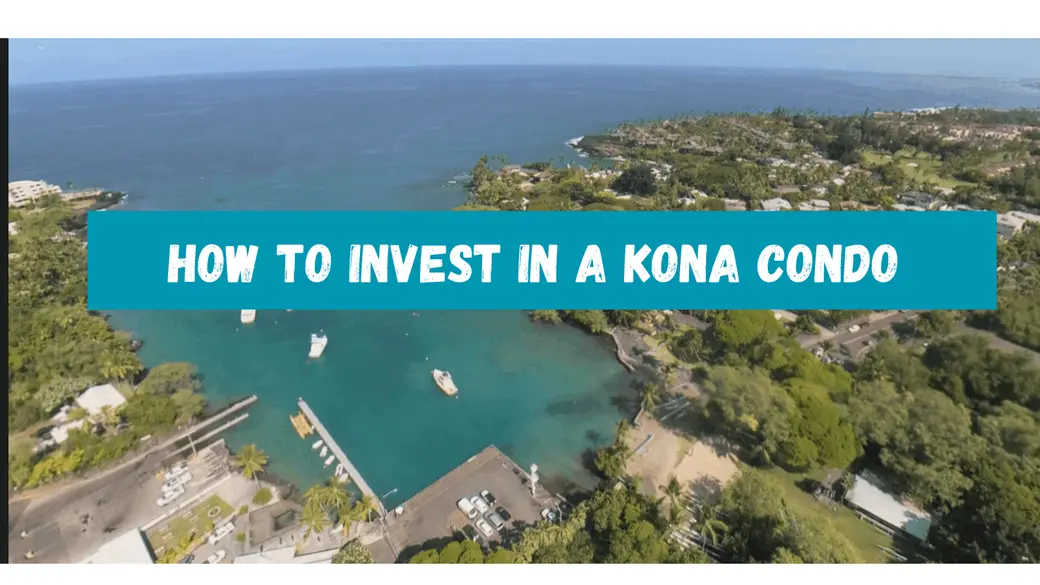
How do I invest in a Kona condo? The answer follows five sequential steps: assess the current market window, confirm short-term rental eligibility, arrange the right financing, model realistic returns, and clear due diligence before you close. Every one of those steps matters, and skipping any single one is where Kona condo investments go sideways. The good news for buyers evaluating this market right now: the Kailua-Kona condo market sits in a buyer-favorable position in 2026, with more negotiating room than investors have seen in years. The 365Hawaii team uses this five-step framework in its investor consultations, so what follows is locally grounded insight, not generic real estate advice.
Key takeaways
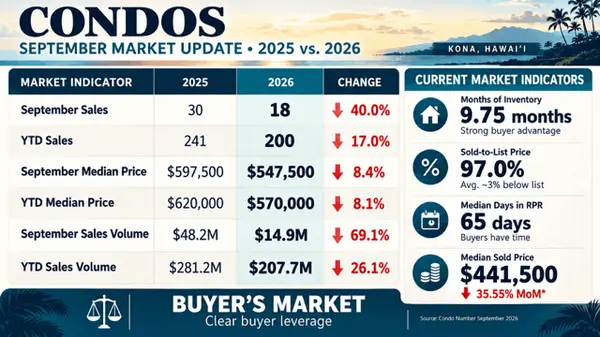
- Market timing is favorable: The median Kailua-Kona condo price is $570,000 year-to-date, down 8.1% year over year, with 8.7 months of supply favoring buyers.
- STVR eligibility is the critical filter: Four conditions must align simultaneously: zoning, TVR registration, CPR status, and HOA document permission. All four, not three.
- Financing varies by buyer type: Expect 20–30% down for domestic investors and 25–35% for foreign nationals, with investor rates ranging from 7.5% to 11%+ depending on loan type.
- Gross yield looks better than net yield: A typical Kona condo may produce $55,000–$70,000 in gross annual revenue, but net operating yield after expenses lands at roughly 3–5%.
- Due diligence is non-negotiable: Reserve fund health, pending assessments, and HOA rental restrictions can make or break an investment that looks good on paper.
- Local expertise changes outcomes: Working with a team that knows which Kona buildings have clean STVR track records reduces the risk of costly post-closing surprises.
Is the Kona condo market worth entering in 2026?
The short answer is yes, with clear eyes about the numbers. The median condo sales price in Kailua-Kona is $570,000 year-to-date, representing an 8.1% decline year over year. Inventory currently sits at 8.7 months of supply, up nearly 47.5% from 2025. That figure is well above the six-month threshold that defines a balanced market, which means buyers are driving the conversation, not sellers.
There is a pricing spread worth understanding before you make an offer. Completed sales are closing at a $570,000 median, while the 184 active listings carry a median asking price around $404,000. That gap tells you some listings are priced aggressively and some are sitting, which creates real opportunity for investors who know how to read a market and move deliberately rather than reactively.
The math behind market softness matters for investors specifically. When entry prices compress, the denominator in any yield calculation improves. To illustrate with a hypothetical scenario: a condo priced at $650,000 in 2023 that penciled out at 2.5% net yield might clear 4% at today's pricing, before you have optimized a single element of the rental operation. That is a meaningful shift, though actual results depend on the specific property, expense structure, and rental performance.
Which condo segments are most active right now
The Kailua-Kona condo market splits roughly into two tiers. Resort and oceanfront properties at $800,000 and above attract a specific buyer profile and carry higher HOA fees, often exceeding $1,500 per month at luxury properties. The mid-market segment, typically between $400,000 and $700,000, is where most investor activity concentrates and where transaction volume tells a clearer story about realistic entry points.
Mid-market condos with confirmed vacation-rental zoning tend to move faster than general inventory, even in a buyer's market. That is the segment where demand from investor buyers and lifestyle buyers overlaps. If you find a unit that checks the STVR eligibility boxes covered in the next section, understand that it likely carries less negotiating room than a unit without rental authorization.
How do I invest in a Kona condo? Start with short-term rental eligibility
This is the most consequential question in the entire investment process, and it must be answered before you write an offer. Many buyers discover after closing that their condo cannot legally be rented short-term. That is not a small problem, it eliminates the core income strategy and leaves you holding a property with carrying costs that do not pencil out.
Hawaii County now distinguishes between STVRs (unhosted rentals of 30 days or fewer) and the broader TVR registration system that took effect September 1, 2026, with a compliance deadline of December 31, 2026. Registration is countywide and required for any dwelling rented for fewer than 180 consecutive days. What registration does not do is legalize a rental that is not already permitted by zoning. A condo must satisfy four conditions simultaneously, and all four must be confirmed before you make an offer.
County zoning and the 2026 TVR registration system
Unhosted STVRs are permitted in Resort-Hotel (V) districts; certain commercial districts including CG, CN, CV, and CDH; residential properties within General Plan Resort or Resort Node designations; and, under specific conditions, Multi-Family Residential (RM) parcels established as a Condominium Property Regime. Outside those authorized areas, a unit can only legally operate short-term if it holds a valid Nonconforming Use Certificate tied to pre-April 1, 2019 operation. Properties without that NUC and outside authorized zoning districts cannot legally host short-term guests, regardless of what a listing description says or what neighboring units are doing. Confirm current zoning eligibility directly with the Hawaii County Planning Department using the property's Tax Map Key.
The 2026 TVR registration number must appear in all advertising. Unhosted STVR registration costs $500 initially and $250 for annual renewal. Operators with existing valid county approvals before September 1, 2026, are treated as registered and receive further instructions from the county.
CPR status and what the HOA documents actually say
Even with correct county zoning, an HOA's condominium declaration or CC&Rs can block short-term rentals entirely. This catches buyers off guard regularly. The fact that units in the same building are actively listed on Airbnb does not mean the practice is permitted by the association documents. Enforcement history is uneven, and associations sometimes allow violations for years before clamping down.
Request the full condominium declaration and all amendments, not a summary. Read the rental restriction language directly. Then pull the board meeting minutes from the last 12–24 months and look for any discussion of rental enforcement, owner complaints about guests, or proposed amendments to rental rules. A building where the board has quietly tolerated short-term rentals without authorization is a building where policy could change after your closing date.
The four-way eligibility test every buyer must run
Before making an offer on any Kona condo as a vacation rental investment, confirm all four of the following:
- The parcel's zoning and General Plan designation permit STVR or TVR use, verified directly with the Hawaii County Planning Department using the Tax Map Key.
- The unit has a valid TVR registration or a qualifying existing approval such as an NUC.
- The property is established as a Condominium Property Regime under Hawaii Revised Statutes chapter 514B.
- The condominium declaration and any amendments explicitly permit short-term rentals without restriction.
Miss any one of these four and the unit cannot legally operate as a short-term rental. Not might not. Cannot.
How do you finance a Kona investment condo?
Investment condo financing in Hawaii is more restrictive than owner-occupied financing, and resort or hotel-zoned properties add another layer of complexity. Before you start shopping properties, know your down payment requirement and rate range. Discovering that a building you love is classified as a condotel and requires 35% down, or cash, changes your calculus significantly.
Down payment requirements by buyer type
The table below summarizes the financing landscape for 2026 Kona condo buyers. Pay particular attention to the condotel row: buildings that fail standard condo project review require specialized loan products that carry meaningfully higher down payments and rates.
| Buyer type | Loan type | Typical down payment | Indicative 2026 rate range |
|---|---|---|---|
| Local investor | Conventional investment | 20–30% | 7.5%–8.5% |
| Local or domestic investor | DSCR loan | 20–25% | 8%–10% |
| Non-resident domestic investor | Conventional or DSCR | 20–30% | 7.5%–9% |
| Foreign-national buyer | Portfolio or asset-based | 25–35% | 8.5%–11%+ |
| Condotel or resort unit buyer | Specialized condotel or cash | 25–40% or cash | 8%–10%+ |
Loan types that work for Kona rental properties
The DSCR loan is particularly useful for investors who want underwriting based on rental income rather than personal income documentation. If you are a business owner, self-employed, or a non-resident investor without traditional W-2 income, DSCR loans often make the deal possible when conventional financing falls short. Most programs require a DSCR ratio of at least 1.00, and a ratio of 1.25 or higher typically improves both approval odds and rate pricing.
Condo project approval matters as much as your credit score. The lender will independently review the HOA's financials, owner-occupancy ratio, investor concentration, insurance coverage, and whether the building is classified as a condotel or standard condo. A building that fails project review can kill a loan even when the borrower is highly qualified. Ask your lender to run project eligibility checks early, before you have committed to a purchase timeline.
Planning for monthly carrying costs before the first booking
HOA dues for a standard Kailua-Kona condo typically run $700–$1,200 per month, with resort and oceanfront properties regularly exceeding $1,500. Add owner-paid HO-6 interior insurance, property taxes, electricity, and a personal maintenance reserve of $100–$300 per month. Before financing, plan on $900–$1,700 or more in monthly carrying costs for the property alone.
Special assessments deserve their own budget line. Older Kona buildings face ongoing challenges with salt-air corrosion, concrete spalling, aging roofs, elevators, and plumbing. Major underfunded projects can trigger assessments of $20,000–$50,000 per unit. That figure reflects the actual exposure profile of aging oceanfront properties throughout West Hawaii. Build a separate reserve for this risk and treat it as a real cost, not a worst-case scenario.
What ROI should you realistically expect from a Kona vacation rental?
Hawaii's official tourism data shows Kona occupancy at 53.9% in March, dipping to 50.8% in May and 46.7% in August. Average daily rates from state sources ranged from $386 in March to $363 in June. Using those figures as a baseline, a well-positioned Kona vacation rental condo in the mid-market range can reasonably target 45–60% occupancy and nightly rates of $325–$390. With conservative planning numbers of 50% occupancy and a $350 average daily rate, a typical unit generates approximately $55,000–$70,000 in gross annual revenue. That looks strong until you subtract operating expenses, at which point the picture becomes more realistic.
Occupancy rates and nightly rates in 2026
Peak-season performance should never be annualized when building an investment model. Using March's 53.9% occupancy to project annual revenue will overstate what the property actually earns across a full calendar year. The August figure of 46.7% is the one to stress-test your projections against. Commercial short-term rental analytics platforms often report higher average daily rates than official state data, partly because they sample active, well-managed listings rather than all registered units. For conservative underwriting, use a $350–$375 ADR as your base case and treat anything above that as upside rather than expectation.
Gross vs. net yield: building a realistic income model
Here is what the math actually looks like. A Kailua-Kona investment condo purchased at $700,000, operating at 52% occupancy with a $350 average daily rate, generates roughly $65,000 in gross annual revenue, approximately a 9.3% gross yield on purchase price. Before anyone gets excited, operating expenses consume a significant portion of that number.
Subtract HOA dues at $10,800 annually, property management fees of 25–30% of gross revenue ($16,000–$19,500), property taxes, HO-6 insurance, utilities, cleaning, supplies, and maintenance. The net operating yield after those deductions lands at roughly 3–5%. At a $900,000 entry price, the same revenue model tightens considerably, often falling below 3% net operating yield before accounting for debt service or income taxes. Model the conservative scenario first, and treat stronger returns as upside.
Note that Hawaii also imposes a Transient Accommodations Tax (TAT) on short-term rental income, currently at 10.25% on gross rental proceeds, with separate General Excise Tax (GET) obligations. TAT must be remitted to the Hawaii Department of Taxation and is a real line item in your operating budget. Factor it in before you finalize any yield projection.
How property management fees affect your bottom line
Full-service Kona vacation rental management runs 25–35% of gross revenue for short-term rentals. That fee covers listing management across platforms, guest communication, cleaning coordination, and routine maintenance. Self-managing from the mainland sounds appealing on paper, but it is operationally difficult when you are not on-island to handle guest issues, key lockouts, or unexpected maintenance calls.
Budget management fees into your underwriting from day one and treat them as a fixed cost. The investors who skip this step tend to burn out managing remotely within 18 months and either sell at a bad time or end up paying management fees anyway after the chaos convinces them otherwise.
What does the due diligence checklist cover before you close?
Due diligence is where deals get confirmed or walked away from. Skipping any item on this checklist has cost investors real money in the Kailua-Kona market. The complexity of aging building stock and Hawaii-specific STVR regulations means thorough pre-closing review is the difference between a solid investment and an expensive lesson.
Documents to pull before making an offer
Request the following before you are emotionally invested in any property:
- Tax Map Key zoning verification directly from the Hawaii County Planning Department, confirming zoning district and General Plan designation
- Existing STVR permit, TVR registration number, or NUC documentation from the county
- Full condominium declaration and all amendments, including rental restriction language
- HOA budget and reserve study for a minimum of two years, with the current funding percentage clearly identified
- Board meeting minutes from the last 12–24 months, reviewed for assessment discussions, insurance issues, or rental enforcement actions
- Disclosure of all current and pending special assessments, with dollar amounts per unit
- Master insurance declarations, confirming coverage type and limits
- Association delinquency rate on dues collection
Older Kona buildings frequently carry lower current dues but significantly higher assessment exposure due to aging roofs, concrete, elevators, and plumbing systems battered by salt air and time. A building with low monthly dues and a thin reserve fund is not a bargain. It is a liability waiting to crystallize.
Red flags in HOA financials and what they signal
The reserve study is the single most important document most buyers overlook. It projects the cost of major repairs and replacements over a 30-year horizon and shows what percentage of those projected costs the association currently has funded. A funded ratio below 70% warrants careful scrutiny; below 50% is a serious warning sign. Hawaii law requires a minimum of 50% funded using standard methods, but legal minimums and investment-grade standards are not the same thing.
Look specifically for deferred maintenance items, a pattern of dues increases over the past five years, and any pending litigation involving the association. A building with $50,000 in unfunded elevator or roof reserves not reflected in the asking price is not priced correctly. Your offer should account for that liability directly. If the seller will not negotiate around demonstrated reserve exposure, that is information worth acting on.
How 365Hawaii walks investors through every step
The five-step process described throughout this article is the actual framework the 365Hawaii team applies when working with investors evaluating Kona condos as income properties. 365Hawaii has been actively tracking this market since its founding, and the local knowledge we bring to investor consultations goes well beyond what any automated valuation tool or national platform can provide.
What a personalized investor consultation with 365Hawaii covers
During an investor consultation, 365Hawaii helps buyers identify which condo buildings have clean STVR track records and which carry undisclosed assessment exposure or rental restriction issues that do not show up in a listing search. We connect buyers with local lenders who understand Hawaii condo project approval requirements, a genuine advantage when financing nuances routinely trip up out-of-state lenders.
We also help clients model realistic ROI for specific properties using actual Kona market data, not national vacation rental averages that have no bearing on how a specific building on Ali'i Drive or in Keauhou actually performs. Investors who come to us after falling in love with a listing often discover things in our review process that change their offer strategy. Finding the right property takes longer than finding a property, and the difference between those two outcomes is measured in real dollars over the life of the investment.
Local knowledge that doesn't show up in listing data
365Hawaii has built one of the most engaged Hawaii real estate audiences in the state, with an active YouTube presence and a dedicated real estate channel. The neighborhood-level market education we share through those channels gives our investor clients context that national platforms simply cannot replicate. When we tell you that a specific building has a pattern of board-level instability or that a particular stretch of the Kona coast is outperforming the broader market, that comes from sustained, on-the-ground engagement, not a data pull. Book a consultation with the 365Hawaii team to get a clear picture of what specific properties can realistically earn.
FAQ: How do I invest in a Kona condo?
How do I invest in a Kona condo as an out-of-state buyer?
The process is the same whether you are based on the mainland or abroad: confirm STVR eligibility, arrange Hawaii-appropriate financing (DSCR loans work well for non-resident investors), model conservative returns using local occupancy and ADR data, and complete thorough due diligence on the HOA before closing. Working with a locally based real estate team removes the information gap that catches out-of-state buyers off guard.
What is the minimum down payment to invest in a Kona condo?
For most domestic investors using conventional or DSCR financing, expect a minimum of 20% down. Foreign nationals and buyers purchasing in condotel-classified buildings typically need 25–35% or more. Some condotel properties require all-cash purchases depending on the lender's project review outcome.
Are short-term rentals legal in all Kona condos?
No. Legal STVR operation requires four conditions to align: correct zoning or General Plan designation, a valid TVR registration or NUC, CPR status under Hawaii Revised Statutes chapter 514B, and HOA documents that explicitly permit short-term rentals. Confirm all four before making an offer, not after.
What taxes apply to Kona vacation rental income?
Hawaii short-term rental income is subject to the Transient Accommodations Tax (TAT), currently at 10.25% of gross rental proceeds, as well as the General Excise Tax (GET). Both must be remitted to the Hawaii Department of Taxation. Factor these into your net yield projections from the start.
What net yield should I expect from a Kona condo investment?
After HOA dues, property management fees of 25–35% of gross revenue, property taxes, insurance, utilities, and maintenance, a typical Kona condo investment produces a net operating yield of roughly 3–5%. Higher-priced entry points compress yield further. Model the conservative scenario first and treat stronger performance as upside.
Ready to move forward on a Kona condo investment?
The five steps reinforce each other in sequence: assess the current market window, run the four-way STVR eligibility test, secure the right financing structure for your buyer profile, model conservative ROI expectations using real Kona data, and complete a thorough due diligence review before you remove contingencies. None of these steps can be skipped, and none of them work as well in isolation as they do executed in order.
Investing in a Kailua-Kona condo is a legitimate income strategy in 2026, but only when the fundamentals are confirmed rather than assumed. The buyers who do well here understand that Hawaii has its own rules, its own building challenges, and its own rental market dynamics. They work with people who know those things deeply rather than learning them through expensive experience.
If you want to skip the learning curve and get a grounded picture of what specific properties can realistically earn, book a consultation with the 365Hawaii team. The Kailua-Kona market's long-term appeal for investors drawn to the island lifestyle is not going anywhere, and the buyers who position themselves correctly in 2026 will look back at this window as the right time to move.
Categories
Recent Posts